

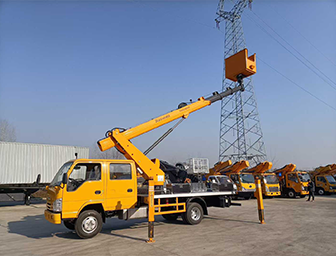
Here’s a structured collection of key information about Aerial work platform (AWP) Trucks for Ports:
1. Definition
A port-specific AWP truck is a specialized vehicle equipped with an elevated platform (mounted on a heavy-duty chassis) designed to provide safe, flexible access to high or hard-to-reach areas in port environments. It combines mobility (to navigate large port yards) with vertical/horizontal reach for maintenance, inspection, or repair tasks.
2. Core Uses in Ports
AWP trucks are critical for port operations due to their ability to access tall, complex structures:
- Container Crane Maintenance: Inspect/repair ship-to-shore (STS) cranes, rubber-tired gantry (RTG) cranes, or automated stacking cranes (ASCs) (e.g., checking spreader bars, electrical components, or structural welds).
- Port Infrastructure Repair: Fix lighting systems, signage, electrical lines, or structural parts of piers, quays, or warehouse exteriors.
- Vessel Services: Access ship superstructures (bridges, masts, or cargo hatches) for repairs, cleaning, or safety inspections (e.g., checking lifebuoys or radar systems).
- Cargo Handling Support: Reach high stacks of containers/bulk goods for inspection or minor adjustments (e.g., securing loose cargo).
- Safety Inspections: Check elevated safety equipment (fire extinguishers, surveillance cameras) across the port.
3. Suitable AWP Types for Ports
Not all AWPs are ideal for port conditions—these are the most common:
- Telescopic Boom Lifts: Long, straight hydraulic booms (up to 185+ feet) with extended horizontal reach. Perfect for tall cranes or vessel superstructures.
- Articulating (Knuckle) Boom Lifts: Multi-jointed booms that bend to navigate around obstacles (e.g., container stacks, crane legs). Ideal for tight or complex spaces.
- Truck-Mounted AWPs: Mounted on rugged, all-terrain truck chassis (4x4 options) to move across port yards (paved, gravel, or uneven ground).
- Scissor Lifts: Vertical-only elevation with a stable, large platform. Best for fixed-area tasks (e.g., warehouse exterior maintenance).
4. Key Features for Port Use
- Corrosion Resistance: Saltwater and humid air demand anti-rust coatings (e.g., stainless steel parts, galvanized frames) to prevent degradation.
- All-Terrain Mobility: Rugged tires, high ground clearance, and 4x4 capability to handle port yards’ rough surfaces.
- Wind Stability: Built-in sensors or limits to avoid operation in high winds (typically <25-30 mph) to prevent tipping.
- High Load Capacity: Platforms that support 500-1,000 lbs (technicians + tools/materials).
- Safety Systems: Emergency stop buttons, overload sensors, fall protection anchors, and stability controls (e.g., outriggers for uneven ground).
- Extended Reach: Vertical (up to 200 feet) and horizontal (up to 100+ feet) to cover large port structures.
5. Safety Considerations
- Operator Training: Certified training in port-specific hazards (moving containers, ship traffic, wind risks).
- Pre-Use Inspections: Check for corrosion, hydraulic leaks, or stability issues before operation.
- Wind Limits: Strictly follow manufacturer guidelines for wind speed (ports are open, wind gusts are common).
- Communication: Use two-way radios to coordinate with ground teams (avoid collisions with cranes or vehicles).
- Load Compliance: Never exceed the platform’s weight limit (overloading risks instability).
6. Leading Manufacturers
- JLG: Offers telescopic booms (e.g., 1850SJ, 150-foot reach) and articulating models for port use.
- Genie: Known for all-terrain AWPs (e.g., Z-80/60 articulating boom with 80-foot height and 60-foot horizontal reach).
- Haulotte: Provides corrosion-resistant models (e.g., HT23RTJ telescopic boom) designed for coastal environments.
- Skyjack: Offers compact, maneuverable scissor lifts and boom lifts for port yards.
7. Application Examples
- A telescopic boom lift inspects the top of an STS crane’s hoist system.
- An articulating boom navigates around container stacks to repair a pier’s lighting.
- A truck-mounted AWP services a ship’s bridge radar while docked.
- A scissor lift paints the exterior of a port warehouse at 25 feet.
This information covers the essential aspects of AWP trucks for ports, from their uses to safety and selection criteria. Let me know if you need more details on specific models or use cases!
This website uses cookies to ensure you get the best experience on our website.



 WhatsApp
 Phone
Phone
Comment
(0)